By Alfrique O. Mwana
“Take Care of The Land, And the Falls Take Care of Us”
A local Swahili proverb says, kutembea kwingi ndiko kuona mengi – the more you travel, the more you experience. Bomet County is a perfect example of this. Bomet, known for fresh produce, has more to offer than just food. Here, the land opens wide, and the waterfalls sing a sound you can feel in your bones.
Its lyrics are water, falling from great heights, hitting rocks and pools with a sound that feels older than time. When the waters roar, the mind goes quiet.
Bomet County is green – the kind that hurts your eyes in the morning sun. Tea plantations roll over the hills like a soft, endless blanket. Maize farms climb the slopes. The air is cool and sweet, even in the dry months. Rivers run everywhere, some wide and lazy, some narrow and angry. But the best are the ones that fall: the waterfalls of Bomet – Cheploch, Nyangores, and Kapkatet. Each fall has its own voice, its own story. Together, they speak to the people of Bomet. But these days, the people are also speaking back to them – guarding them, worrying over them, planting trees along their banks.
Cheploch – The Guardian That Growls
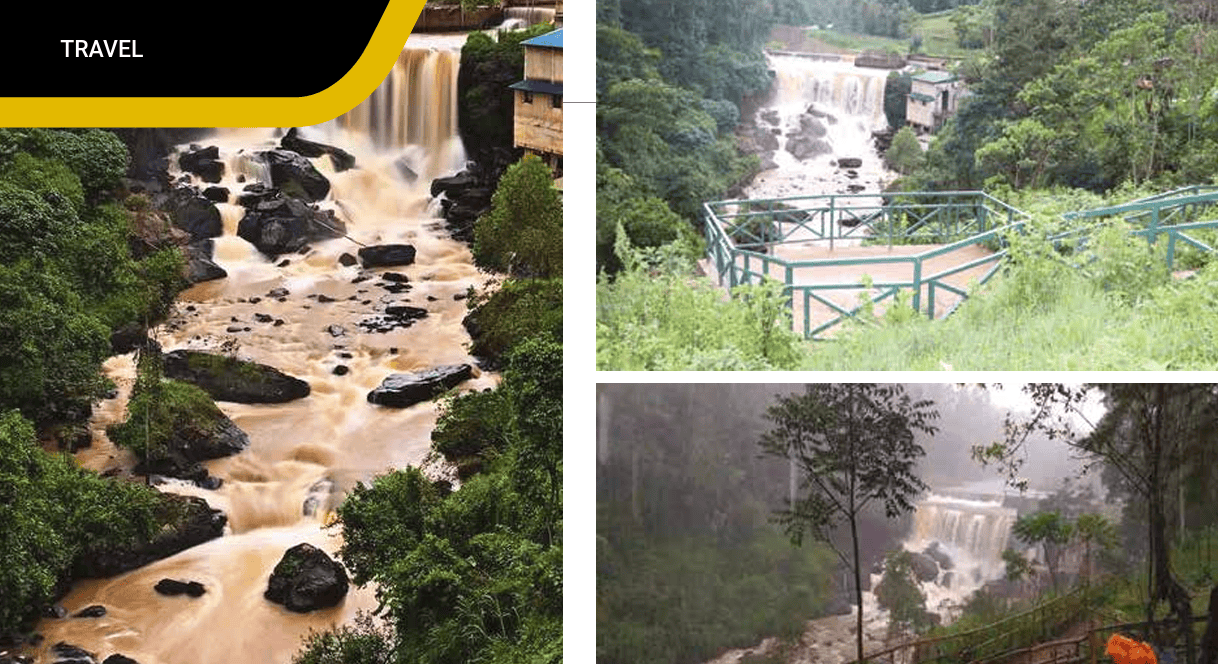
The Cheploch Gorge features a series of cascading waterfalls, where the river forces its way through a narrow rock cut. The water is brown, heavy with soil from upstream. But when the sun hits just right, you see flashes of gold, as if the river carries treasure. The sound of Cheploch is a deep, constant rumble. It does not shout. It growls. You feel it first in your chest before it reaches your ears. The rocks are black and smooth, carved over centuries by the water’s patience. Moss grows in the cracks. Small birds with bright yellow chests sit on the wet stones and sing back at the falls.
Local elders say Cheploch is the guardian of the county’s secrets. If you sit by the gorge long enough, the water will show you the truth you’ve been hiding. That’s why people come before making big decisions – marriage, travel, starting a business. They sit, listen, and often leave with a clear mind.
Cheploch is also dangerous. The rocks are slippery, the current is strong. Every few years, someone falls in; sometimes they are saved, sometimes not. The falls do not mean harm, but they do not make exceptions for carelessness.
What has changed is this: upstream, farmers have begun planting napier grass along the riverbanks. Not because anyone forced them. Because the soil was washing away so fast that Cheploch’s water turned from brown to red, and the gold flashes almost disappeared. A local water resources association now meets once a month under a fig tree. They monitor erosion. They fine a man who cuts trees too close to the river. “Take care of the land,” one elder told me, “and the falls take care of us.” Ignore Cheploch, and it will still remind you who is stronger. But now, people are learning not to need that reminder.
Nyangores – Where You Go to Let Go
A few hours’ walk from Cheploch, behind a wall of cedar trees, lies Nyangores. This waterfall is completely different. While Cheploch is loud and rough, Nyangores is soft and wide. Water spreads over a smooth rock face like a white curtain. It does not roar. It whispers and hums. The pool below is deep green, and so still that you can see your own face.
Locals say Nyangores is for thinking, grieving, remembering. People come alone – widows to cry, fathers to pray for children, young people to write poetry and fold it into boats to sail on the pool. The boats almost always sink before reaching the other side. That is the point. Nyangores teaches that some things are meant to be let go.
There is no railing, ticket booth, or shop. It is just you, the water, and the forest. A few years ago, a developer wanted to build a viewing deck and a snack kiosk. The community said no. Instead, they planted two thousand indigenous trees behind the cedar wall – podo, cordia, croton. Now, school groups come not just to see the falls, but to learn why some places deserve nothing but respect. A handwritten sign nailed to a tree says: “Carry out what you carry in.” Nyangores is not a bin.
During the rainy season, Nyangores grows twice as wide. The whisper becomes a loud murmur, and the green pool turns brown, churning like boiling tea. But even then, there is peace. The falls simply become more of what they are.
Kapkatet – The Tallest, The Testing Ground
Then there is Kapkatet, which in the local dialect means the place of the steep drop – a modest name for something enormous. Kapkatet is the tallest waterfall in Bomet County, dropping nearly eighty metres – almost the height of a twenty-storey building. The water does not fall gently. It throws itself off the cliff with total abandon. The sound begins as distant thunder half a kilometre away. As you get closer, it becomes a roar. At the edge, it is everything – you cannot hear your voice, the birds, or the wind. All you hear is the thunder of water falling.
The spray rises like smoke. On sunny afternoons, rainbows live in that spray, appearing and disappearing like coloured doors. The ground near the edge is always wet. Moss and ferns grow thick here, loving the mist.
Local tradition says Kapkatet is the meeting point between the living and ancestors. Elders say the water carries messages from below to above. That is why, during drought or trouble, the community gathers here. They whisper prayers, believing the water carries them to the heavens.
Kapkatet is also a testing ground. In the old days, young warriors were brought here to prove their courage – standing at the edge for a full minute without stepping back. Those who failed trained more; those who succeeded took on new responsibilities. Today, some young people still do this privately. Not because anyone forces them, but because the falls still ask: Are you ready to face what scares you? That same courage now shows up in a different way. Young farmers from the Nyangores catchment now lead village tree-planting days. They say a person who respects the edge of a waterfall will also respect a river’s source.
The Pressure Beneath the Beauty
But the waterfalls are not eternal in the way a first-time visitor imagines. Upstream, Bomet’s population is growing. More tea factories mean more water drawn from the same rivers. During the driest months – January, February – Kapkatet’s roar has softened to a whisper that worries elders. “The falls have never been this thin in my father’s time,” a man named Kipruto told me, gesturing toward the spray. “That spray used to reach twice as high.”
Climate charts tell the same story: shorter long rains, hotter dry spells. The water that falls at Kapkatet travels through farms, past homesteads, through pipes to mulching sheds. By the time it reaches the gorge, it is already borrowed. The question is not whether the waterfalls will survive – they will. The question is what kind of falls will be left for the next generation, and who will choose to defend them.
The Seasons – When to Watch, When to Stay Back
The waterfalls change with the rains. From March to June, the long rains come, rivers swell, and the falls become giants. The sound of Kapkatet can be heard from villages two kilometres away. The water turns brown and angry – this is not the time for swimming or standing close, but for watching from a safe distance and feeling the power of nature.
From July to October, as the rains slow, the falls become clearer. The brown water turns greenish, then almost clear. You can see the rocks at the bottom of the pools. Families come with picnic baskets. Children play in shallow streams. Lovers take photographs. This is the gentle season, the friendly face of the waterfalls.
November and December bring short rains, and the falls wake up again, but not as fiercely. From January to February, the dry months, the falls become thin. Kapkatet, which once roared, now only whispers. That is when you see who really comes – not tourists, but locals. They sit a long time. They are not disappointed. A thin rope of water still falls. A whisper still comes. And when the rains return, so does the roar.
How to Visit Bomet’s Waterfalls Well
There are no big hotels, no guides with loudspeakers. Only footpaths. Some paths are treacherous. The value beyond is life-changing and memorable, but it depends on visitors who do not leave rubbish, do not carve names into wet rocks, and ask at the village elder’s house before hiking to Nyangores. It is not a secret, but it is protected.
What the Waterfalls Leave Behind
The waterfalls are not just places to see. They are teachers. They teach patience – falling the same way every day. They teach humility – reminding you how small you are. And they teach hope, because even in the driest season, they do not stop completely.
Locals say the waterfalls do not end when you leave. They follow you – not as a sound, but as a feeling. When you are stuck in traffic in Nairobi, Kisumu, or Mombasa, you might remember how the light hit the spray at Kapkatet. When you worry about money, work, or love, you might hear the whisper of Nyangores. When you feel small, you might remember Cheploch’s steady growl.
But if you listen long enough, you hear something else. A question. Not what the waterfalls can do for you, but what you will carry back to them. A traveller who remembers the spray of Kapkatet can also remember that a plastic bottle left behind takes 200 years to decompose. The people of Bomet say: the waterfalls do not need your awe. They need your hands.
That is the roar that turns into silence. And that is the silence that finally lets you hear yourself think – and then, to act.
The writer is a Communication Consultant.
Email: [email protected]