

By Mourine Warui Why Financial Literacy Must Be a Core Part of The Curriculum I wish they taught this in school.”

Thrift Remains One of The Most Important Yet Undervalued Virtues in Modern Society By Jim McFie, a fellow of ICPAK At

By CPA Paul Chepkwony If You Cannot Identify How Money Is Being Made, It Is Likely That the System Is

Compiled by Angela Mutiso How The Body Keeps Blood Healthy and Why It Matters Mwikali woke up tired for the eighteenth month
By CPA Sylvia Karaba Senior Counsel Elisha Ongoya shared a relatable, profound lesson in an inspiring yet humorously delivered Engage

By CPA Awegi Benstone Oluoch Their Challenge Is Lack of Opportunities to Explore Their Exceptional Potential Imagine a world where a Visually Impaired
By Jim McFie, a Fellow of ICPAK Since 1 January 1999, Every Set of Financial Statements in Kenya Must Be Prepared

By CPA Robert Mwangi Impact Of NPLS on Profitability & Liquidity In credit management, risk refers to the likelihood that a

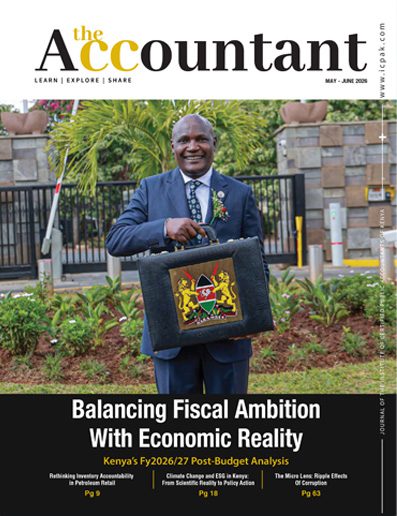
By CPA Peter Kibet Kitur Kenya’s Fy2026/27 Post-Budget Analysis The Budget comes at a particularly uncertain time for the global economy. Escalating geopolitical tensions across the Middle East,