By CPA Awegi Benstone Oluoch
Their Challenge Is Lack of Opportunities to Explore Their Exceptional Potential
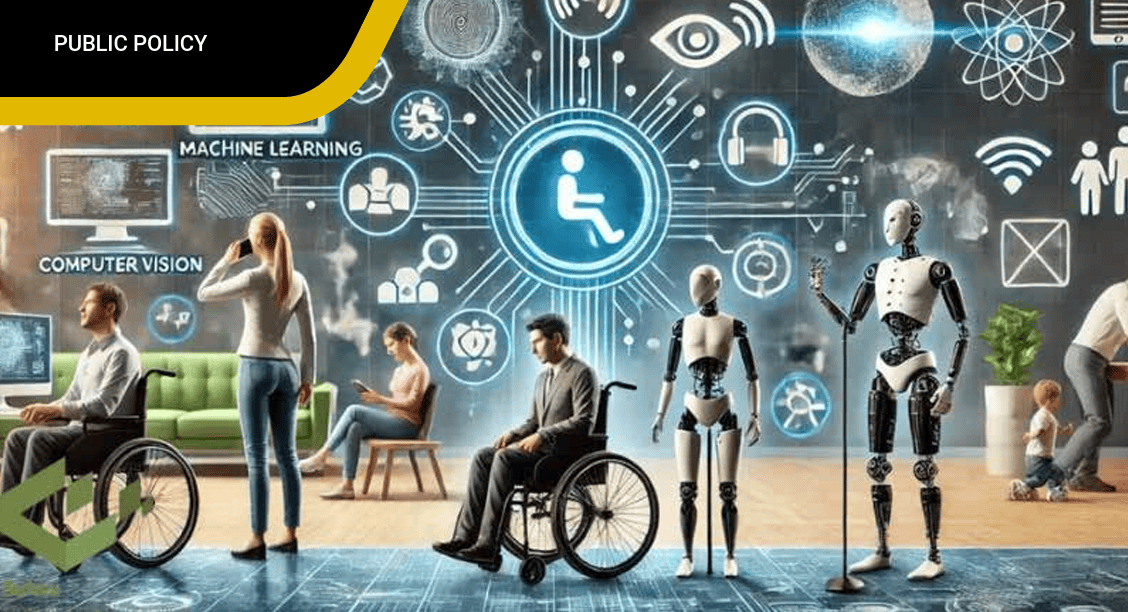
Imagine a world where a Visually Impaired (blind) learner or accountant can “see” through a voice that reads every word, where a (Hearing impaired) deaf lawyer argues confidently in court as captions unfold in real time, where a child with autism finds a friend in a robot that patiently teaches him social cues, and where a paralyzed man takes his first steps with the help of an intelligent exoskeleton. This is not science fiction; it is the quiet revolution of Artificial Intelligence (AI). Yet, behind this promise lies an unfinished question: will AI truly become the great equaliser that transforms the lives of persons with disabilities, or will it remain a dazzling dream accessible only to a privileged few? The answer rests not in machines but in the human choices that stakeholders, YOU and ME, dare to make today.
“Technology is best when it brings people together.” These words by Matt Mullenweg capture the essence of what Artificial Intelligence (AI) offers to persons with disabilities: a chance to connect, participate, and live with dignity. For centuries, disability has been associated with barriers to education, employment, healthcare, and even social belonging. Yet, AI is reshaping this narrative by dismantling those very barriers and replacing them with bridges. As Helen Keller once said, “The only thing worse than being blind is having sight but no vision.” AI provides that vision, not just in a literal sense for the blind, but in a broader understanding of creating inclusive futures.
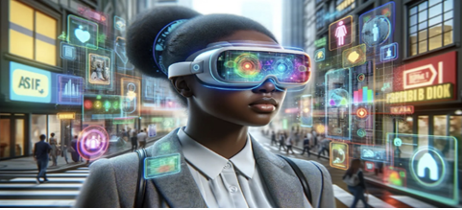
For persons with visual impairments, AI restores independence and confidence. Smart glasses, AI-enabled navigation systems, and applications that can read and describe text. Smart glasses, navigation apps, and text-to-speech systems open doors to classrooms, offices, and streets once closed to them. With these tools, a blind professional can read contracts, a student can access libraries, and a commuter can navigate public transport all without dependence on others. But for this promise to reach every household, governments must subsidise costs, investors must fund inclusive innovation, and accountants must track impact so resources are allocated fairly.
For the hearing impaired, communication is often the greatest obstacle. AI has opened new channels through real-time transcription, captioning, and even sign language recognition. Imagine courtrooms, hospitals, or classrooms where AI ensures no word is missed, and no citizen is excluded. Nelson Mandela’s words resonate here: “Talk to a man in a language he understands, that goes to his head. Talk to him in his own language, that goes to his heart.” AI’s role in bridging linguistic and sensory gaps affirms that persons with hearing impairments are not merely present, but fully engaged.
For persons who are both deaf and blind (deafblind), the world can often feel like an impenetrable wall of silence and darkness. Yet, Artificial Intelligence is steadily chiselling away at this wall, creating pathways of connection. AI-powered tactile devices, such as smart gloves and haptic wearables, can translate speech or text into touch-based vibrations, allowing deafblind users to “feel” communication in real time. Similarly, intelligent Braille displays instantly convert digital content into tactile reading, while AI-guided navigation tools use vibrations and auditory cues to support safe mobility. Helen Keller, who herself lived with deaf blindness, once said, “Although the world is full of suffering, it is full also of the overcoming of it.” Through AI, stakeholders can help deafblind people overcome isolation and achieve independence, but only if policymakers prioritise affordability and distribution.
People with Autism Spectrum Disorders often struggle with social cues and communication. AI is helping reshape this journey through personalised learning platforms, therapeutic apps, and socially intelligent robots. These tools provide safe, supportive environments where autistic persons can practice interaction, manage emotions, and build confidence. As Temple Grandin, a prominent advocate with autism, reminds us, “The world needs all kinds of minds.” Governments that embed AI support into classrooms and therapy programs are not only supporting persons but also enriching society with diverse talents and perspectives.
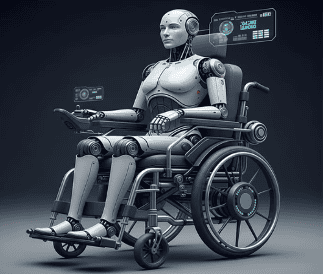
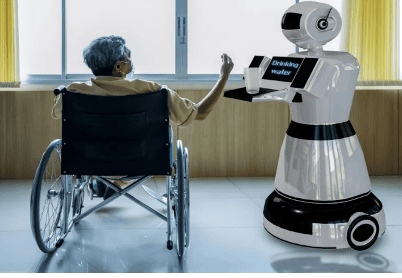
For persons with mobility disabilities, AI-driven robotics and assistive devices are breaking new ground. Robotic exoskeletons enable people with paralysis to stand and walk, while AI-controlled prosthetics respond intuitively to muscle signals, making movements feel more natural. AI-powered wheelchairs can now navigate environments with minimal user input, reducing the need for caregiver assistance. These advancements embody Stephen Hawking’s assertion that “Intelligence is the ability to adapt to change.” With AI, the body may falter, but autonomy is preserved.
Gifted and talented learners represent a unique group within the spectrum of special needs: their challenge is not a lack of ability but rather the lack of opportunities to explore their exceptional potential. Artificial Intelligence is proving to be a remarkable companion in this journey, offering adaptive learning systems that stretch beyond the limits of conventional classrooms. By analysing patterns in a learner’s performance, AI can recommend advanced materials, design personalised projects, and even link them with global peers who share similar abilities. Intelligent tutoring systems can nurture creativity in art, science, or problem-solving at a pace matched to each student’s capabilities. Albert Einstein’s reflection is fitting here: “It is not that I’m so smart, but I stay with the questions much longer.” With AI, gifted learners are not confined to one-size-fits-all education; instead, they are encouraged to linger over their questions, dig deeper into knowledge, and transform their brilliance into innovation.
Intellectual disabilities present unique challenges in learning, problem-solving, and daily functioning. AI addresses these through adaptive learning platforms that tailor content to the learner’s pace and abilities. These systems can break down complex information into manageable steps, offering continuous encouragement and tracking progress. In workplaces, AI-powered assistants help individuals organise tasks, manage schedules, and communicate effectively. Such tools do not erase disability but honour diverse intellectual capacities, echoing Temple Grandin’s reminder that, “The world needs all kinds of minds.”
When it comes to learning disabilities such as dyslexia or ADHD, AI again acts as a silent tutor and guide. Voice recognition and predictive text software help those with reading difficulties express themselves without stigma, while focus-enhancing apps create personalised study environments. By reducing frustration and enhancing confidence, AI tools ensure that learning disabilities no longer define a student’s potential but rather shape new pathways of achievement.
Psychiatric (Intellectual and Developmental) disabilities, often hidden and stigmatised, also find support in AI. Mental health chatbots, powered by natural language processing, provide real-time counselling and emotional support, particularly for those who lack immediate access to therapists. AI can also analyse behavioural patterns, detecting early warning signs of conditions such as depression or anxiety and alerting caregivers or professionals before crises occur. This proactive approach echoes Franklin D. Roosevelt’s moral challenge: “The test of our progress is not whether we add more to the abundance of those who have much, but whether we provide enough for those who have too little.” Through AI, society can extend care to those whose struggles are often invisible.
For AI to fulfil this transformative promise, however, government intervention is not optional; it is essential. Policies that mandate accessibility standards, subsidies that make AI tools affordable, and investments in inclusive infrastructure all form the backbone of equitable progress. Governments must foster public-private partnerships that ensure innovation is driven not solely by profit, but by the pursuit of inclusion. As Mahatma Gandhi wisely said, “The true measure of any society can be found in how it treats its most vulnerable members.” When AI is guided by compassion, justice, and shared responsibility, it becomes more than a technology; it becomes a moral commitment to human dignity.
Artificial Intelligence is rewriting what it means to live with a disability. It restores vision to the blind, voice to the silent, mobility to the immobile, and confidence to those who have long been overlooked. Yet, its success depends on whether societies embrace it as a shared duty rather than a private luxury. AI does not remove disability; instead, it illuminates ability. It challenges the world to see beyond limitations and to create a future where, as Keller envisioned, vision is not defined by what one sees, but by the opportunities one is given.
Conclusion
The promise of Artificial Intelligence for persons with disabilities is undeniable: voices restored, barriers dismantled, and dignity renewed. Yet, the true test lies ahead: will governments, accountants, investors, and the communities embrace AI as a shared responsibility that ensures no one is left behind, or will it remain a privilege for the few? The suspense rests not in what technology can do, but in what humanity chooses to do with it.
The writer is a Certified Public Accountant (CPA), holds a Bachelor of Commerce (BCom) in Finance, and a Master of Science in Commerce (specializing in Finance and Accounting). He currently serves as an Internal Auditor at the Kenya Institute of Special Education (KISE).
Email: [email protected]