By CPA James Mugambi
The question of how road infrastructure should be financed has become increasingly important as governments confront declining fuel tax revenues, rising maintenance costs, urban congestion, and the gradual transition toward electric mobility. Transport networks underpin economic productivity, labour mobility, trade, and regional integration, making their financing a matter of broader economic policy rather than a purely technical issue. Within this context, road tolling has re-emerged as a prominent policy instrument. The debate is often framed as a choice between tolls and fuel taxes, yet the more relevant question is whether the two mechanisms serve distinct functions within a modern road finance system.
For much of the twentieth century, fuel taxation occupied a central position in transport finance. Governments required a revenue source capable of funding the expansion of road networks without imposing significant administrative burdens. Fuel taxes fulfilled this role effectively. Collection occurred through a relatively small number of fuel distributors and retailers; compliance costs remained low; and motorists contributed indirectly based on their fuel consumption. The arrangement provided a practical approximation of the user-pays principle while avoiding the complexity of charging motorists directly for road use.
The effectiveness of fuel taxation depended on a close relationship between fuel consumption and vehicle usage. Motorists who travelled longer distances generally consumed more fuel and therefore paid more tax. This relationship provided a stable foundation for road finance throughout much of the motor vehicle era. Recent developments have weakened that connection. Improvements in fuel efficiency, the growth of hybrid vehicles, and the increasing adoption of electric vehicles have reduced the extent to which fuel purchases reflect actual road usage. At the same time, infrastructure expenditure requirements have continued to grow, widening the gap between road financing needs and revenues generated by traditional fuel taxes.
Road tolling represents a much older approach to infrastructure finance. Long before the emergence of fuel taxes, governments financed roads, bridges, and trade routes through direct user charges. Medieval tolls and bridge levies were common across Europe and parts of Asia, while the turnpike trusts established in eighteenth- and nineteenth-century Britain demonstrated how road infrastructure could be financed through payments collected directly from users. Although these systems were gradually displaced by fuel taxation during the twentieth century, they established the enduring principle that users of transport infrastructure can contribute directly to its financing.
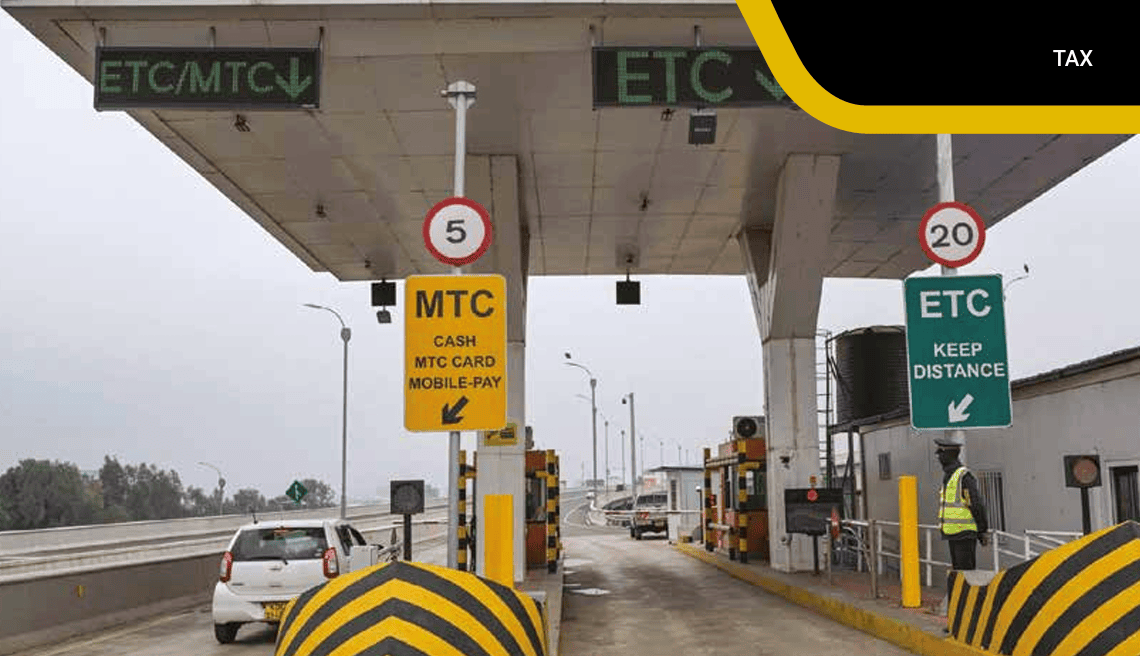
The renewed interest in tolling reflects both technological and fiscal developments. Electronic toll collection systems have dramatically reduced the administrative costs associated with direct charging. Modern tolling no longer requires extensive toll plazas or manual collection processes. Charges can be collected electronically while vehicles remain in motion, making direct road pricing more practical than it was in earlier periods. These technological advances have expanded the role of tolling beyond revenue collection, transforming it into a broader policy instrument.
From an economic perspective, one of the principal advantages of tolling lies in its ability to price road use more precisely. Fuel taxes apply to all forms of driving, regardless of location, time of day, or road conditions. A litre of fuel consumed on an uncongested rural highway is taxed in the same manner as a litre consumed during peak-hour traffic in a major city. The social costs associated with these journeys vary widely. Congestion delays other users, heavy vehicles accelerate pavement deterioration, and traffic concentrations create environmental and health costs that vary substantially across locations and time periods.
Tolling allows governments to account for these differences more directly. Charges can be varied according to vehicle type, travel distance, route selection, or time of use. This flexibility enables road pricing systems to reflect infrastructure costs and congestion pressures more accurately than fuel taxes. The growing adoption of congestion pricing schemes in major cities illustrates this shift. In such systems, tolls are designed not only to raise revenue but also to influence travel behaviour by encouraging motorists to consider the broader costs their journeys impose on other users.
These characteristics place tolling within a broader tradition of economic policies aimed at addressing externalities. Economists have long argued that prices should reflect not only private costs but also the costs imposed on society. Fuel taxes capture some of these effects indirectly, particularly those associated with fuel consumption and emissions. Tolling provides a greater scope to address congestion and infrastructure wear, as charges can be targeted at specific locations and user categories. As a result, tolls can often achieve efficiency objectives that fuel taxes cannot.
The case for tolling nevertheless extends beyond efficiency considerations. Public finance decisions are also shaped by questions of equity and political acceptability. Fuel taxes have frequently been criticised for their regressive effects because lower-income households often spend a larger proportion of their income on transport. This burden can be particularly significant in regions where public transport options are limited and commuting distances are long.
Road tolling raises its own distributional concerns. The effects depend heavily on network design, route availability, and travel patterns. Where toll roads provide faster journeys, improved safety, or superior infrastructure, users may view the charge as payment for a higher-quality service. Where alternative routes are limited, tolls may be perceived as unavoidable costs. The equity implications therefore, depend less on the existence of tolls themselves than on how the system is designed and how revenues are subsequently used.
These considerations help explain why road tolling is rarely viewed as a complete replacement for fuel taxation. Fuel taxes provide a broad revenue base that supports extensive road networks, including rural and secondary roads that would generate insufficient traffic volumes to sustain direct charging. Financing such networks entirely through tolling would require extensive coverage or complex mileage-based charging systems, both of which present administrative and political challenges.
Road tolling performs a different function. It enables governments to recover costs associated with specific infrastructure investments, manage congestion on heavily used corridors, and allocate costs more directly among different categories of road users. These functions become increasingly valuable as fuel tax revenues weaken and as policymakers seek stronger links between infrastructure usage and infrastructure financing.
The transition toward electric mobility reinforces this relationship. Electric vehicles use road infrastructure in much the same way as conventional vehicles while contributing relatively little through fuel taxation. As their share of the vehicle fleet expands, governments will face growing pressure to identify alternative sources of transport revenue. Tolling provides one mechanism through which infrastructure contributions can be maintained regardless of vehicle propulsion technology. The increasing interest in distance-based charging and network-wide road pricing reflects this emerging fiscal challenge.
Viewed within a broader historical and economic context, road tolling is best understood as a complement rather than a substitute for fuel taxation. Fuel taxes remain an effective, relatively simple mechanism for generating broad-based revenue across entire transport networks. Tolling provides a degree of pricing precision that allows governments to address congestion, infrastructure financing needs, and differences in road usage more directly. The strengths of one instrument correspond closely to the limitations of the other.
The future of road finance is therefore likely to be characterised by hybrid systems rather than exclusive reliance on either mechanism. Fuel taxation will continue to provide foundational revenue across national road networks, while tolling will play an expanding role in financing major infrastructure projects, managing congestion, and compensating for the gradual erosion of fuel-based revenues. Such arrangements reflect the reality that modern transport systems serve multiple economic functions and therefore require multiple financing instruments to support them.
The writer is a Finance, Operations and Tax Professional with more than a decade of experience in the profession. Hecurrently heads the Finance & operations departments of two sister companies in Nairobi. He holds a Masters degree in Tax Administration from Moi University and is a member of ICPAK.
(https://substack.com/@arsenemwenda)– (https://www.linkedin.com/newsletters/tax-and-more-7366750008982888448
email- [email protected]