By CPA Gladys Mueni Masai
Environmental, Social, and Governance (ESG) considerations have become central to global, regional, and national development planning as climate risks intensify. From a scientific perspective, climate change is accelerating global environmental degradation, driving more extreme weather patterns, threatening ecosystems, and exposing socio-economic vulnerabilities. This article examines the global outlook, Africa’s climate vulnerability, and Kenya’s evolving environmental challenges before offering policy recommendations to strengthen ESG-aligned climate resilience.
Scientists warn that global warming is intensifying the hydrological cycle: higher temperatures increase evaporation, thereby loading the atmosphere with more water vapour, leading to both more intense rainfall and longer drought periods. This phenomenon, often termed “climate whiplash,” has triggered unprecedented swings between dry spells and heavy storms in many cities around the world. As a result, land degradation, soil erosion, and ecological instability are rising globally. These patterns reflect long-established atmospheric science: warmer climates generate greater variability and more extreme weather, destabilising human and natural systems.
Africa is warming faster than the global average, with temperature increases of approximately 0.3°C per decade. Despite contributing minimally to global greenhouse emissions, African nations face disproportionately high climate impacts, ranging from prolonged droughts to destructive flooding and heatwaves. According to the World Meteorological Organisation, African countries are increasingly allocating between 3%–9% of their GDP to disaster recovery and climate adaptation (Reuters, 2024). The strain on livelihoods, agriculture, water resources, and infrastructure reflects the continent’s heightened vulnerability.
Across East Africa, extreme heat, erratic rainfall, and deteriorating land stability have disrupted food systems and household economies (IPP Media, 2024). Degraded soils and diminishing vegetation cover have reduced natural resilience, increasing the risks of floods and landslides.
In Kenya, climate change is no longer abstract; it is evident in the frequency and severity of environmental hazards. The Government of Kenya estimates that more than 70% of natural disasters are climate-related, particularly floods and droughts (GoK, 2024).
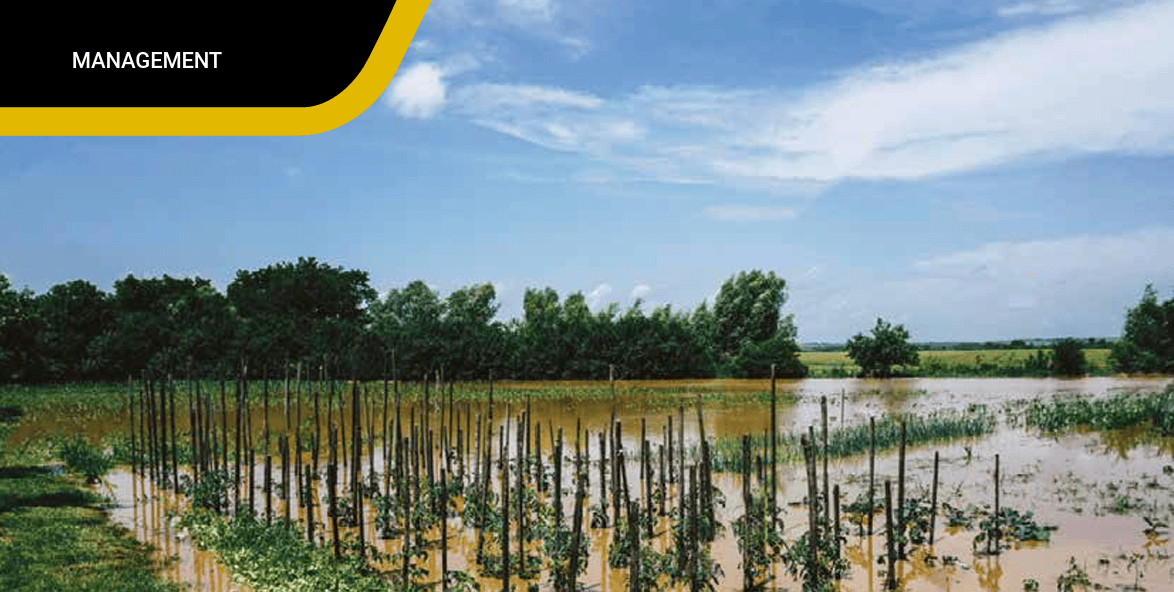
During the 2023–2024 El Niño episode, Kenya experienced catastrophic flooding that displaced over half a million households and damaged extensive farmland (IMPACT, 2024). Flood-prone counties such as Mandera, Wajir, Garissa, and Tana River, as well as Nairobi’s informal settlements, experienced extensive damage to homes and infrastructure (WRI Africa, 2024). Urban areas with poor drainage were especially hard hit, highlighting the need for climate-sensitive infrastructure planning.
The intensity of rainfall has triggered deadly landslides in regions previously considered moderately safe. In Elgeyo Marakwet County, a major landslide in November 2025 killed at least 26 people and washed away farms and homes (Africa News, 2025). Earlier, in 2019, West Pokot suffered one of the deadliest landslides in Kenya’s history, claiming 52 lives. These events illustrate the interaction among degraded land, extreme rainfall, and slope instability, consistent with soil and geotechnical scientific findings (Arxiv, 2022).
Kenya’s climate is becoming increasingly unpredictable. Cycles of extreme heat harden the soil, followed by sudden heavy rains that trigger flash floods, a pattern driven by interactions among global warming, El Niño, and the Indian Ocean Dipole (Tuko, 2024). These variations affect agricultural output, water availability, and public health.
Effective ESG frameworks integrate scientific principles that explain how environmental degradation occurs and how nature-based solutions support resilience: Warmer air holds more moisture, so higher temperatures lead to heavier rainfall. Conversely, the same warming increases evaporation, causing drought. Vegetation cover enhances soil structure, stabilises slopes, increases water infiltration, and reduces runoff. Deforestation or land misuse reduces this natural buffer, increasing the risks of floods and landslides. Trees absorb carbon dioxide, reduce atmospheric greenhouse gases, and moderate local microclimates.
FLOCCA and County-Level Climate-Smart Innovations
The Kenya National Treasury has spearheaded the Financing Locally-Led Climate Action Program (FLOCCA), supporting counties in large-scale climate-smart agriculture. These county projects support local employment, food systems resilience, and reduced vulnerability to climate shocks.
In Laikipia County, large-scale cultivation of Boma Rhodes grass supports pastoral livelihoods by providing nutritious, drought-resistant fodder that can be harvested multiple times per year. Organised fodder farms reduce reliance on unpredictable natural pastures, stabilising livestock productivity and income, while the grass’s deep roots prevent soil erosion and aid ecological restoration in overgrazed rangelands (Graduate Farmer, 2025).
In Kajiado County, a KSh 159.5 million investment under the County Climate Resilience Grant supports landscape restoration, improved pastures, and fodder systems to mitigate feed shortages. Pastoralists grow high‑value Juncao grass and use rotational grazing to enhance soil fertility and sustainable land use. The county’s 2023–2033 livestock feed strategy, in partnership with FAO and SNV Kenya, also addresses feed deficits and restores degraded pastures affected by invasive species (Kenya Tribune, 2024).
Vihiga County has invested over KSh 300 million in more than 20 solar-powered water schemes, benefiting over 10,000 households and ensuring a reliable water supply for crops and livestock during dry periods. The county’s Agroecology Policy promotes contour farming, organic manure use, and erosion control, enabling the cultivation of fodder crops such as Napier grass and legumes (e.g., Calliandra) in ways that minimise soil erosion, improve fertility, and support sustainable dairy farming (Vihiga County, 2024)
In Siaya County, four major water schemes—Abura Dam, Ahono/Sinaga, Wichlum, and Got Matar—have been rehabilitated and expanded, with 72 solar panels installed at Ahono/Sinaga serving over 15,000 residents. The county has drilled and solarised more than 70 boreholes and upgraded over 20 water-supply systems, raising safe water access from 45% to approximately 70%. Additionally, 40 water pans support irrigation and climate-smart agriculture, while 11 community groups received solar-powered pumps and incubators valued at KSh 3.5 million to boost irrigation and poultry production (Siaya County Assembly, 2024).
In Kiambu County, KSh 99 million has been allocated to drilling and solar-powered boreholes in Githunguri, Gichamu and Kikuyu. It is constructing farm ponds for rainwater harvesting, elevating water storage tanks, and protecting catchment areas through reforestation to support climate-smart agriculture. The Climate Change Ward Committees and a Grievance Redress Mechanism ensure local participation, transparency, and sustainability. The county’s solar street-lighting initiative, “Angaza Kiambu,” reduces carbon emissions and reinforces renewable energy adoption. (Kiambu County, 2024).
Bomet County is supporting the solarisation of water‑supply infrastructure to reduce reliance on diesel or mains electricity for water pumping, a project managed by Bomet Water and Sanitation Company (BOMWASCO), which will install solar‑powered pumps in Bomet, Sotik, and Longisa (Bomet Climate Change Kenya News). It is distributing over 19,500 avocado seedlings to farming groups in 11 wards, including Konoin, Sotik, Bomet East, and Bomet Central, fostering climate-smart agriculture and boosting household resilience. (Bomet NewsWire)
In Tharaka Nithi County, include the Naikara, Kerara, Gatonto Gravity Sand Dam, and Muthambi Gitije Irrigation Project, aimed at enhancing water storage and watershed restoration to better withstand droughts and flooding. Complementing this infrastructure, the county partners with ACEECA to rehabilitate forests through the planting of bamboo and acacia, restore river lines, and strengthen community groups, including women, youth, and local forest associations, to sustainably manage natural resources in a climate-resilient manner (Mount Kenya Times, 2024).
The Kenyan government’s ambitious plan to plant 15 billion trees by 2032 aims to restore degraded landscapes, boost carbon sequestration, strengthen watersheds, and create green jobs. This initiative enhances SDG 13 (Climate Action), SDG 15 (Life on Land), SDG 1 & SDG 2 (No Poverty / Zero Hunger), SDG 12 (Responsible Consumption and Production) and aligns with global biodiversity goals.
A compelling testimony shared by H.E. Prime Cabinet Secretary Musalia Mudavadi during Mazingira Day 2025 illustrated the environmental transformation in Vihiga’s Maragoli Hills. Historically, rains failed to reach communities near the forest; however, following reforestation, rainfall patterns improved, streams such as River Inyanza began flowing again, and community groups now rely on these water sources for dry-season irrigation. Local groups benefit through seedling production, land preparation, tree planting, forest protection, and climate education, creating sustainable livelihoods.
Policy Recommendations
· The Kenya Forest Service and National Treasury should jointly develop costing frameworks to ensure fair compensation for smallholder farmers and community groups, reducing exploitation and ensuring sustainable forest restoration.
· Support for local groups involved in tree planting, seedling nurseries, and forest conservation should be embedded in county budgets to ensure continuity and ownership.
· Expand FLOCCA and other carbon-financed agricultural programs to promote large-scale fodder production, regenerative farming, and water-harvesting technologies.
· Counties should adopt ESG reporting standards to track environmental outcomes, social impact, and governance effectiveness within climate initiatives.
· Strengthen data-driven disaster preparedness for floods, landslides, and heatwaves, and enhance public awareness on climate risks.
Conclusion
The global climate crisis presents profound risks, but also opportunities for countries like Kenya to lead in sustainable development. ESG-driven actions rooted in science, community engagement, and strong governance can help restore ecosystems, safeguard livelihoods, and ensure climate-resilient growth. FLOCCA projects, reforestation efforts, and local innovations demonstrate Kenya’s commitment to climate action; however, sustained investments, policy coherence, and fair compensation frameworks remain essential for long-term success.
References
Africa News. (2025). Kenya’s deadly landslides test the country’s climate readiness.
GOK (2024). Biennial Transparency Report.
IPP Media. (2024). Extreme climate conditions strain Africa’s livelihoods and food systems.
Reuters. (2024). Africa faces steep costs as temperatures rise.
World Bank & WMO. (2021). Kenya Climate Risk Country Profile.
CPA Gladys Mueni Masai is the Head of Finance and Strategy, Inspire Africa Initiatives Foundation
email: [email protected]